Why You Should See a Board-Certified Prosthodontist Instead of a General Dentist for Dental Implants
Why You Should See a Board-Certified Prosthodontist Instead of a General Dentist for Dental Implants

Introduction: Not All Dental Implant Providers Are Created Equal
Dental implants have become one of the most transformative procedures in modern dentistry — a permanent, natural-looking solution for missing teeth that can restore both function and confidence. But as implant dentistry has grown in popularity, so has the number of providers offering the procedure. Today, general dentists, oral surgeons, periodontists, and prosthodontists all market implant services to patients. So how do you know who is truly qualified to handle your case?
The answer matters more than most people realize. Dental implants are a complex, multi-phase process that involves surgical precision, biomechanical planning, and highly specialized restorative expertise. While a general dentist may offer implant services, a board-certified prosthodontist brings a level of training and focus that can mean the difference between a good result and a great one — and in some cases, the difference between success and a costly complication.
What Is a Board-Certified Prosthodontist?
A prosthodontist is a dental specialist who has completed dental school and then pursued an additional three years of advanced, full-time postgraduate training specifically focused on the restoration and replacement of teeth. This training covers implant dentistry, crowns, bridges, dentures, complex full-mouth reconstruction, cosmetic dentistry, and the management of patients with complex oral conditions.
Board certification takes this a step further. To become a diplomate of the American Board of Prosthodontics, a prosthodontist must pass a rigorous written and clinical examination process that evaluates their knowledge, skill, and case outcomes. Board-certified prosthodontists represent the highest standard of credentialing in their specialty — they have not only completed advanced training but have been independently evaluated and validated by their peers.
There are only approximately 3,700 prosthodontists in the United States, making them a relatively rare and highly specialized resource.
What Training Does a General Dentist Have?
General dentists complete four years of dental school, earning either a DDS (Doctor of Dental Surgery) or DMD (Doctor of Dental Medicine) degree. Their training covers a broad range of dental care — cleanings, fillings, extractions, root canals, basic restorations, and more. They are essential primary care providers for oral health.
However, dental school training in implant dentistry is limited. Most general dentists receive only a brief introduction to implant procedures during their education. Any implant-related skills they develop beyond that typically come from weekend continuing education courses, hands-on seminars, or on-the-job experience — not from years of dedicated, mentored, postgraduate training.
This is not a criticism of general dentists; they are excellent providers for routine dental care. But dental implants are not routine — and the gap in specialized preparation is significant.
The Case for a Prosthodontist: Five Key Reasons
1. Implant Dentistry Is Their Core Specialty
For a general dentist, implants are one of dozens of procedures they may offer. For a prosthodontist, implant restoration is central to their entire specialty. They spend years learning the intricacies of osseointegration (how the implant fuses with bone), occlusal forces (how your bite distributes pressure), and the precise design of implant-supported crowns, bridges, and full-arch restorations.
This deep, focused expertise means a prosthodontist doesn't just place a crown on an implant — they engineer your restoration from the start with a comprehensive understanding of how it will function, look, and hold up over decades.
2. Complex Cases Require Complex Expertise
Not every implant patient is a straightforward case. Many patients seeking implants have experienced bone loss, gum disease, multiple missing teeth, failing existing dental work, or a history of dental trauma. Others need full-mouth reconstruction or implant-supported dentures.
Prosthodontists are specifically trained to handle these high-complexity scenarios. They understand how to work with bone grafts, how to sequence treatment across multiple specialists, and how to design restorations that account for the unique anatomy of each patient's mouth. A general dentist may refer these complex cases out — but a prosthodontist is the specialist they refer to.
3. Aesthetic Mastery and Precision
Dental implants sit at the intersection of function and aesthetics. A restoration that looks unnatural — wrong color, wrong proportion, wrong gum contour — can undermine years of treatment and patient investment. Prosthodontists receive extensive training in dental materials, shade matching, facial proportions, and soft tissue management specifically because aesthetic mastery is a cornerstone of their specialty.
Whether you need a single implant crown or a full-arch smile, a prosthodontist is trained to deliver results that are virtually indistinguishable from natural teeth.
4. A Comprehensive Treatment Plan From Day One
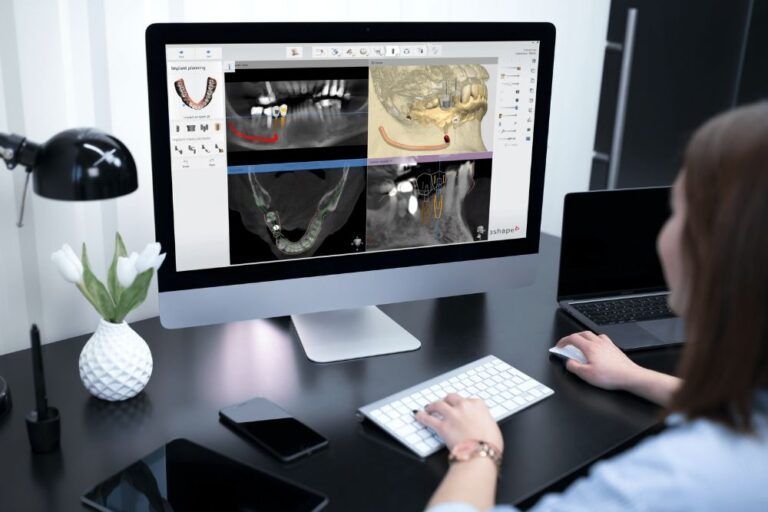
One of the most underappreciated advantages of seeing a prosthodontist is their ability to develop a holistic, coordinated treatment plan before a single incision is made. Great implant outcomes aren't just about surgical technique — they depend on thorough planning that considers your bone density, bite mechanics, gum health, and long-term goals.
Prosthodontists are trained to look at the entire picture. They frequently collaborate with oral surgeons and periodontists when surgery is needed, but they serve as the architect of your treatment — ensuring every phase is planned and executed toward an optimal final result.
5. Lower Risk of Costly Complications
Implant failure, improper placement, poor bite alignment, and aesthetic mismatches are among the complications that can arise when implants are placed or restored by providers without specialized training. These complications are not just painful and frustrating — they are expensive to correct, sometimes requiring the removal and replacement of implants or significant bone grafting.
Board-certified prosthodontists have the training and clinical experience to minimize these risks. Investing in a specialist upfront is almost always far more cost-effective than addressing avoidable complications later.
What to Look for When Choosing Your Provider
When evaluating any provider for dental implants, ask the following questions:
- Are you a dental specialist, and in what specialty? Look for a prosthodontist, or a team that includes one.
- Are you board-certified? Board certification signals the highest level of credentialing in a specialty.
- How many implant cases do you complete each year? Volume matters alongside training.
- Do you coordinate with oral surgeons or periodontists for the surgical phase? Collaborative care is a good sign.
- Can I see before-and-after photos of your implant cases? Visual evidence of outcomes speaks volumes.
The American College of Prosthodontists maintains a searchable directory to help patients find a board-certified specialist near them: prosthodontics.org/find-a-prosthodontist.
The Bottom Line
Dental implants are a long-term investment in your health, function, and quality of life. They deserve the same level of specialist care you would expect for any other significant medical procedure. Just as you would see a cardiologist for a heart condition rather than a general practitioner, choosing a board-certified prosthodontist for dental implants means trusting your care to someone who has dedicated years of advanced training to exactly this outcome.
General dentists play a vital role in oral health — but for the planning, restoration, and long-term management of dental implants, a board-certified prosthodontist is the gold standard. When your smile is on the line, the expertise you choose matters enormously.